Fenchol, a natural compound commonly present in some plants including basil (Ocimum basilicum), decreases Alzheimer’s disease pathology by activating the free fatty acid receptor 2 (FFAR2) signaling, according to new research published in the journal Frontiers in Aging Neuroscience. Fenchol, a plant-derived compound that gives basil its aromatic scent, can …
Read More »Phacopid Trilobites
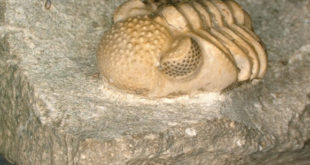
Trilobites are extinct arthropods that dominated the faunas of the Paleozoic Era. Since their appearance 523 million years ago, they were equipped with elaborate compound eyes. While most of them possessed apposition compound eyes, comparable to the compound eyes of many crustaceans and insects living today, trilobites of the suborder …
Read More »Green Tea Compound
Epigallocatechin-3-gallate (EGCG), a polyphenol found in the leaves of green tea (Camellia sinensis), may increase levels of the natural anti-cancer protein p53, often referred to as ‘the guardian of the genome,’ according to a new study led by Rensselaer Polytechnic Institute scientists. Zhao et al. provide insights into the mechanisms …
Read More »Complex Compound Eyes
A team of paleontologists from Australia and the United Kingdom has found that ancient deep-sea creatures called radiodonts developed sophisticated eyes over 500 million years ago (Cambrian period), with some specially adapted to the dim light of deep water. An artist’s reconstruction of ‘Anomalocaris’ briggsi. Image credit: Katrina Kenny. Radiodonts …
Read More »Blueberry Compound
Pterostilbene, a resveratrol-related polyphenolic compound found in blueberries, has strong immunosuppressive properties, according to a study published in The FASEB Journal. Yashiro et al. evaluated the effect of pterostilbene, a polyphenol found in blueberries, on immune regulation. Image credit: Free-Photos. Polyphenols are natural products that are consumed by humans as …
Read More »Silurian Trilobite
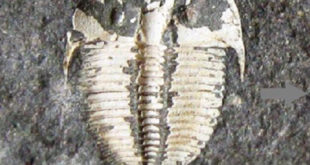
Had Modern Type of Compound Eye Paleontologists have found that Aulacopleura koninckii, a species of trilobite that lived around 429 million years ago (Silurian period), was equipped with a fully modern type of visual system — an apposition compound eye comparable to that of living bees, dragonflies and many diurnal …
Read More »Green Tea Compound Could Have Lifesaving Potential for Patients with Amyloidosis, Multiple Myeloma
The green-tea polyphenol Epigallocatechin gallate (EGCG) may be of particular benefit to patients struggling with amyloidosis and multiple myeloma, according to an international team of researchers led by Washington University in St. Louis. The research is published in the Journal of Biological Chemistry. According to Kathrin Andrich et al, the …
Read More »Compound Found in Chinese Medicinal Herb Fights Mycobacterium tuberculosis
Artemisinin, a natural compound from the sweet wormwood (Artemisia annua), has been found to potentially aid in the treatment of tuberculosis. The study was led by Michigan State University researcher Robert Abramovitch and was published recently in the journal Nature Chemical Biology. Artemisinin is derived from the sweet wormwood (Artemisia …
Read More »Hot Pepper Compound Inhibits Growth of Breast Cancer Cells
Capsaicin, a compound found in peppers of the genus Capsicum, inhibits the growth of breast cancer cells, according to a team of researchers in Germany. Capsaicin is found in Capsicum peppers. Image credit: Hans Braxmeier. The team’s experiments were carried out with the SUM149PT cell culture, a model system for …
Read More »Arecoline: Compound Found in Areca Nuts Has Anti-Cancer Potential
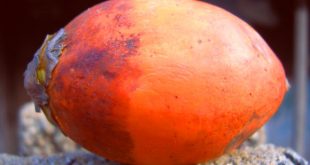
A new study published in the journal Molecular Cell reports that arecoline, an active compound found in areca nuts, has anti-cancer properties. A ripe areca nut. Image credit: Banni Pulikottil / CC BY 2.5. Areca nuts are seed of the areca palm (Areca catechu), which grows in Asia, parts of …
Read More »