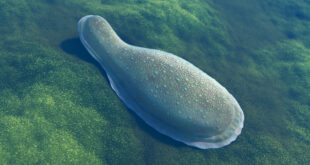
The oldest animals appear in the fossil record among Ediacaran biota communities. In new research, paleontologists from the Australian National University and elsewhere examined the gut contents of three Ediacaran species — the 558-million-year-old tube worm-like Calyptrina and the mollusk-like Kimberella as well as one of the key Ediacaran animals, …
Read More »Gut Bacteria ‘Speak’ to Brain to Control Food Choices in Animals
In a study published recently in the journal PLOS Biology, neuroscientists identified three gut bacteria species — Acetobacter pomorum, Lactobacillus plantarum and L. brevis — that have an impact on animal dietary decisions. According to Leitao-Goncalves et al, gut bacteria control food choice and egg laying in Drosophila melanogaster. Image …
Read More »Researchers Discover How Animals Measure Annual Time to Reproduce
A new study published in the journal Proceedings of the National Academy of Sciences reveals the link between breeding season and the hormone melatonin, made in the pineal gland in the brain during long winter nights. Castle-Miller et al have discovered how animals link the change in seasons to their …
Read More »Ancient Kemetic Knowledge:Sacred African Animals
Hyoliths: Mysterious Cambrian Animals Classified as Lophophorates
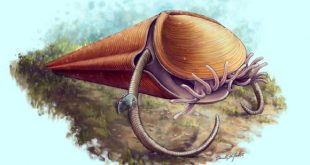
Paleontologists have finally determined what hyoliths — a group of extinct marine creatures — actually are. Reconstruction of the hyolith Haplophrentis on the Cambrian sea floor. Image credit: D. Dufault / Royal Ontario Museum. Hyoliths evolved over 530 million years ago during the Cambrian period and are among the first …
Read More »