Between 2014 and 2016, the OSIRIS (Optical, Spectroscopic, and Infrared Remote Imaging System) camera onboard ESA’s Rosetta spacecraft captured almost 70,000 images of comet 67P/Churyumov-Gerasimenko. Now the OSIRIS team has put all of these images online on a dedicated website — the OSIRIS Image Viewer. These 210 images reflect Rosetta’s …
Read More »NASA Detects Universe’s Earliest Molecule for the First Time
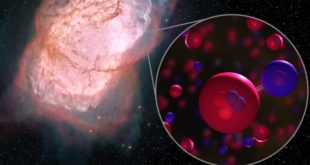
There were no galaxies, stars, or even molecules in the eons following the Big Bang. There were, however, plenty of atoms. With an entire universe of mass in atomic form, it was only a matter of time until the first molecules formed. Scientists have long suspected that helium hydride …
Read More »NASA Experiment Might Have Survived Beresheet Lunar Crash
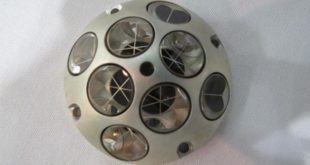
The Israeli Beresheet moon lander didn’t complete its mission, crashing into the moon instead of landing softly. That’s a setback for Israel’s space ambitions, but the mission might not be a complete loss. An experimental NASA payload from the Beresheet spacecraft might still be intact someplace on the lunar …
Read More »An Alien Meteor May Have Burned Up in the Atmosphere in 2014
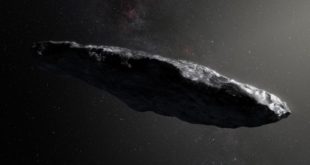
The ancient comet ‘Oumuamua (above) made waves in late 2017 as our first interstellar visitor, but of course, it wasn’t the first. It was simply the first one we ever spotted. Astronomers at Harvard University now say Earth had a much closer encounter with an alien object in 2014. …
Read More »Scientists Find Cometary Fragment in Primitive Asteroidal Meteorite
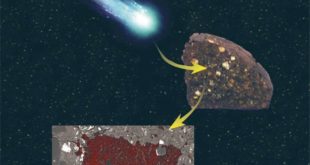
A cometary building block has been discovered inside the LaPaz Icefield (LAP) 02342, a carbonaceous chondrite meteorite found in Antarctica in the 2000s. An illustration showing how a sliver of cometary building block material was swallowed by an asteroid and preserved inside a meteorite. Image credit: Larry Nittler / NASA. …
Read More »Titan’s Lakes are Surprisingly Deep, Have Methane-Dominated Composition, Says Cassini Team
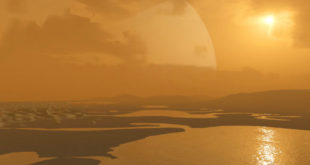
Radar data from NASA’s Cassini spacecraft have revealed that small lakes in the northern hemisphere of Saturn’s hazy moon Titan are surprisingly deep (approximately 330 feet, or 100 m), perched atop hills and filled with methane. The findings, reported in two papers in the journal Nature Astronomy, also provide new …
Read More »SpaceX Wins Contract to Launch NASA’s DART Asteroid Impactor
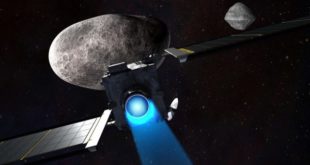
It is not a matter of if but when a dangerously large asteroid ends up on a collision course for Earth, and NASA wants to be ready. The Double Asteroid Redirection Test (DART) has been in development for several years, and now it’s got a real launch date with …
Read More »It Took Half a Ton of Hard Drives to Store the Black Hole Image Data
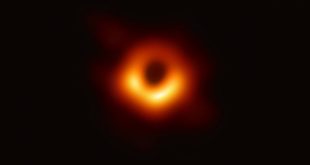
The newly released image of a black hole (below) is a watershed moment for physics. Finally, we can put some of Einstein’s most famous predictions from a century ago to the test, but it was not as easy as pointing a big lens at the M87 galaxy and pressing …
Read More »ExoMars Detects Almost No Methane on Mars in Surprise Result
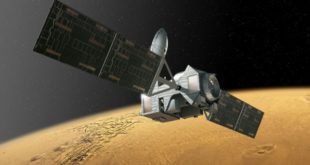
One of the keys to scanning the red planet for present or past life is understanding the molecules that make up its thin atmosphere. Various missions have detected methane on Mars, considered to be one of the hallmarks of living organisms. The arrival of the ExoMars mission with its …
Read More »SpaceX Successfully Launches Falcon Heavy, Lands All Three Boosters
After a few delays, SpaceX launched its second Falcon Heavy rocket yesterday evening. This was SpaceX’s first commercial Falcon Heavy launch, as last year’s test payload was Elon Musk’s Tesla Roadster. Another important distinction: All three of the Falcon Heavy boosters returned safely to Earth. In 2018, the center …
Read More »