Researchers digging at the Cerutti Mastodon site, an archaeological site from the early late Pleistocene epoch near San Diego, California, found animal remains and stone tools that show the first humans were living in North America much earlier than previously thought. A concentration of fossil bone and rock at the …
Read More »Researchers Sequence Barley Genome
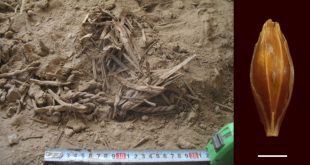
The International Barley Genome Sequencing Consortium, which is led by Dr. Nils Stein of the Leibniz Institute of Plant Genetics and Crop Plant Research, Germany, has mapped the entire genome of barley (Hordeum vulgare), the world’s fourth most important cereal crop after wheat, rice and maize. The research appears in …
Read More »Scientists Find Link between Immune System, Memory and Structure of Brain
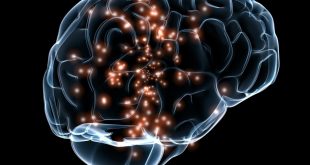
In two separate studies, researchers have demonstrated that both the structure of the brain and several memory functions are linked to immune-related genes. The thickness of the cerebral cortex is correlated with the epigenetic profile of immune-related genes. Image credit: University of Basel. The body’s immune system has a number …
Read More »NASA’s Cassini Orbiter Makes First ‘Grand Finale’ Dive
On Wednesday, April 26, 2017, NASA’s Cassini spacecraft successfully made its first dive through the narrow gap between the giant planet Saturn and its rings. This Cassini image shows features in the atmosphere of Saturn from closer than ever before. The view was captured by the spacecraft during its first …
Read More »Three New Species of Fungus-Farming Ants Discovered in South America
Three new species of the ant genus Sericomyrmex have been discovered in Brazil, Venezuela, Colombia, Ecuador and Peru. Sericomyrmex radioheadi, worker. Image credit: A. Ješovnik T.R. Schultz, doi: 10.3897/zookeys.670.11839. The genus Sericomyrmex belongs to the fungus-farming ants (tribe Attini), a New World group of over 250 species, all of which …
Read More »New Prosthetic Arm Powered by Bluetooth and Brainwaves
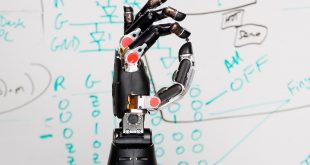
Most of us take for granted how well our brains can relay instructions to our limbs. Doctors and engineers have been trying for years to grant that same surety to those with prosthetic limbs. But interfacing the biological and technological is tricky. There have been some impressive advances in this …
Read More »New Womb-Like Device May Transform Care for Extremely Premature Infants
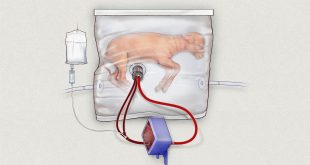
A unique womb-like environment designed by pediatric researchers at Children’s Hospital of Philadelphia — which is in an experimental stage using animal models — could transform care for extremely premature babies: after birth, they would be immersed in lab-made amniotic fluid — and kept underwater for weeks. Most previous attempts …
Read More »Regular Consumption of Sugary Beverages Affects Brain
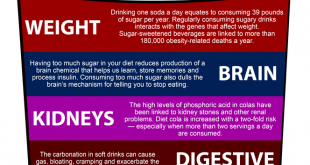
Researchers using data from the Framingham Heart Study (FHS), a joint project of the National Heart, Lung and Blood Institute and Boston University, have shown that people who more frequently consume sugary beverages such as sodas and fruit juices are more likely to have poorer episodic memory, smaller hippocampal and …
Read More »Physical Activity Can Lower Risk of Heart Damage, Says New Study
According to a new study, physical activity can lower the risk of myocardial damage in middle-aged and older adults and reduce the levels of myocardial damage in people who are obese. Physical activity is inversely associated with chronic subclinical myocardial damage, according to a study by Florido et al. Image …
Read More »Wax Moth Caterpillars Found to Eat Polyethylene
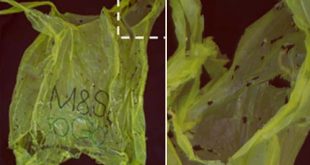
An international team of researchers from Spain and the United Kingdom has found that a caterpillar of the greater wax moth (Galleria mellonella) — commonly known as a wax worm — has the ability to biodegrade polyethylene. Polyethylene degradation by wax worms. Left: plastic bag after exposure to about 100 …
Read More »