The International Space Station (ISS) has a new resident, but it’s not a human—it’s a drone. The small spherical drone was constructed by Japanese space agency JAXA with a special orientation system that allows it to maneuver around the ISS and capture video. Not only is it a convenient way …
Read More »The First Moon Landing Took Place 48 Years Ago Today
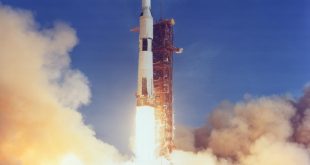
Humans have done a myriad of impressive things in space, from building the International Space Station to landing a robot on a comet. Still, none of those accomplishments have quite the same historical weight as the first time a person walked on the moon. That first moon walk took place …
Read More »New Evidence Pushes Back Aboriginal Occupation of Australia to 65,000 Years Ago
New evidence from a rockshelter in northern Australia shows human occupation of the continent for at least 65,000 years — much longer than other estimates of closer to 50,000 years. Photograph of the Madjedbebe rockshelter during the 2015 excavation. Image credit: Clarkson et al, doi: 10.1038/nature22968. The discovery was made …
Read More »Tomato Consumption May Protect against Skin Cancer
In a research article published in the journal Scientific Reports, Ohio State University scientists report that male mice fed a diet of 10% tomato powder daily for 35 weeks, then exposed to ultraviolet (UV) light, experienced, on average, a 50% decrease in skin cancer tumors compared to mice that ate …
Read More »Hubble Catches Some of the Earliest Stars Ever Formed on Camera
The Hubble Space Telescope has been sending back iconic and stunning photos of space for decades. But it just caught something particularly special on tape: early stars, from the beginning of the universe. And not only are they some of the earliest stars we’ve ever seen, their very existence confirms …
Read More »Daily Crosswords Linked to Better Cognitive Function in Later Life
According to new research presented at the 2017 Alzheimer’s Association International Conference, the more regularly people report doing word puzzles such as crosswords, the better their brain function in later life. The more regularly participants engaged with word puzzles, the better they performed on tasks assessing attention, reasoning and memory. …
Read More »Earth’s Water Explained by Gas Giant Gluttony
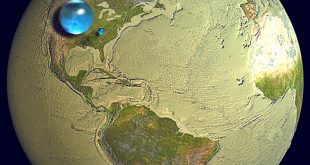
Water on Earth, Mars and everywhere within the inner Solar System can be traced back to the rapid waist-expanding growth of Jupiter and Saturn, which knocked inwards a local population of icy planetesimals. This is according to a new model, which could also explain the current makeup of our modern …
Read More »Only 10-25% of Human Genome is Functional, New Estimate Says
In a paper published in the journal Genome Biology and Evolution, University of Houston Professor Dan Graur says that the functional portion of the human genome probably falls between 10% and 15%, with an upper limit of 25%. These figures are very different from one (about 80%) given in 2012 …
Read More »Astrophysical Shock Waves Generated in the Lab
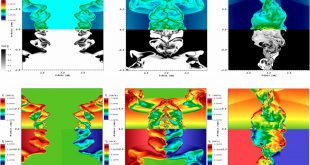
A Princeton-led team of researchers has discovered a revolutionary way to generate high-energy shock waves in the lab. Peering deep into the core of the Crab Nebula, this Hubble image reveals the beating heart of one of the most historic and intensively studied remnants of a supernova, an exploding star. The …
Read More »NASA Reveals Eerie Whistling Electron Waves from Space
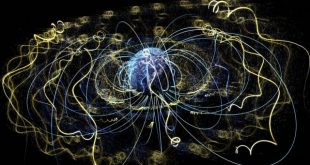
There is no sound in space, at least not the kind of sound we as humans can detect. There is, however, something akin to sound if you have the right tools to listen to it. NASA‘s Goddard Space Flight Center does, in the form of the Van Allen probes. This pair …
Read More »