The TRAPPIST-1 system seems at first to be a good place to look for extraterrestrial life. It has seven rocky planets roughly the same size as Earth, and some of them are in the “habitable zone” of the star where liquid water could exist on the surface. Now, researchers from …
Read More »Beetroot Compound Could Help Slow Progression of Alzheimer’s Disease
Betanin, a natural pigment found in the sugar beet (Beta vulgaris), could eventually help slow the accumulation of misfolded proteins in the brain, a process that is associated with Alzheimer’s disease. Betanin could eventually help slow the progression of Alzheimer’s disease. Image credit: Gyöngyi Nagy. “Betanin shows some promise as …
Read More »Study: Lavender and Tea Tree Oils Contain Hormone-Disrupting Components
A new study from the National Institute of Environmental Health Sciences lends new evidence to a suspected link between regular exposure to lavender oil or tea tree oil and prepubertal gynecomastia (abnormal breast growth in young boys). Ramsey et al identified eight components of lavender and tea tree oils as …
Read More »Martian Oceans Formed Earlier than Thought, Geophysicists Say
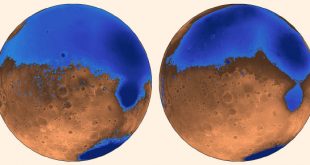
A team of geophysicists at the University of California, Berkeley, proposes that Martian oceans originated several hundred million years earlier than thought, as the Solar System’s largest volcanic system — called Tharsis — formed, and that greenhouse gases enabled the oceans. The team’s theory predicts smaller oceans, more in line …
Read More »Archaeologists Unearth 115,000-Year-Old Bone Tools in China
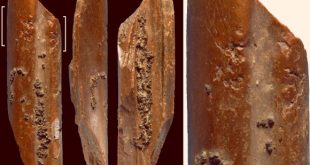
An international team of researchers led by Université de Montréal’s Dr. Luc Doyon has found seven bone soft hammers at the early hominin Lingjing site in Xuchang county of Henan province, China. These 115,000-year-old tools represent the first instance of the use of bone as raw material to modify stone …
Read More »Two New Dog-Faced Bat Species Discovered
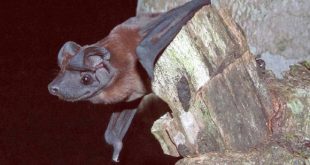
Two new species of dog-faced bats have been discovered in the tropical forests of Central and South America. Both new species are described in the March 2018 issue of the journal Mammalian Biology. The Freeman’s dog-faced bat (Cynomops freeman) in Soberania National Park near the Panama Canal. Image credit: Thomas …
Read More »Alcohol Use Disorders are Major Risk Factor for Dementia, Study Claims
According to a new observational study carried out in France, alcohol use disorders are the most important preventable risk factors for the onset of all types of dementia. Alcohol use disorders are a biggest risk factor for onset of all types of dementia, and especially early-onset dementia. Image credit: Imagens …
Read More »Researchers Identify Nine New Genes for Osteoarthritis
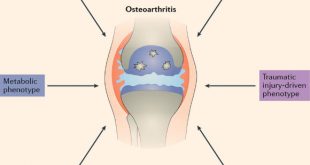
A multinational group of scientists led by the Wellcome Sanger Institute has discovered nine novel genes for osteoarthritis, a degenerative joint disease in which a person’s joints become damaged, stop moving freely and become painful. The results appear today in the journal Nature Genetics (bioRxiv.org preprint). Phenotypes of osteoarthritis: evidence …
Read More »Solenodon Genome Sequenced
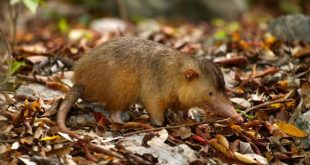
An international team of scientists has sequenced and assembled the genome of a venomous shrew-like insectivore called the Hispaniolan solenodon. The Hispaniolan solenodon (Solenodon paradoxus). Image credit: Eladio Fernandez, Caribbean Nature Photography. The solenodon is a venomous, nocturnal, burrowing, insectivorous mammal belonging to the family Solenodontidae. As one of the …
Read More »Kepler Spacecraft Will Run Out of Fuel In the Coming Months
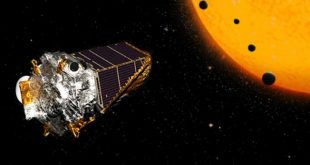
The Kepler Space Telescope has discovered more than 2,000 exoplanets in our galaxy, exceeding all expectations for the mission. Even after tragic setbacks, this plucky little space telescope has been a boon to science. Yet, it’s days are numbered, according to NASA. Mission managers say they expect Kepler to run …
Read More »