A new study, undertaken by a team of University of Exeter researchers using captive Eurasian beavers (Castor fiber), has demonstrated the significant impact the animals have had on reducing the flow of tons of soil and nutrients from nearby fields into a local river system. Eurasian beavers (Castor fiber), a …
Read More »Experimental Osteoporosis Drug Could Treat Human Hair Loss
WAY-316606, a compound originally developed to treat osteoporosis, has a dramatic stimulatory effect on human hair follicles, according to a study published in the journal PLoS Biology. The new drug enhances human hair growth. Image credit: Pexels. Male androgenetic alopecia (MAA) is the most common form of hair loss in …
Read More »NASA’s MMS Mission Discovers New Magnetic Process in Earth’s Magnetosheath Region
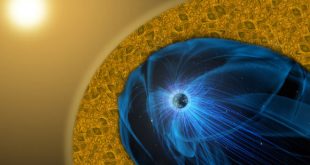
Earth is surrounded by a protective magnetic environment, the magnetosphere, which deflects a supersonic stream of charged particles from the Sun, known as the solar wind. As the particles flow around the Earth’s magnetosphere, it forms a highly turbulent boundary layer called the magnetosheath. In a new discovery, reported in …
Read More »Brain Cholesterol May Play Important Role in Onset of Alzheimer’s Disease
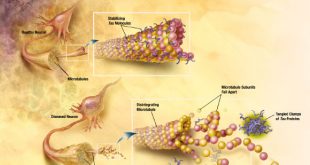
A research team led by a University of Cambridge scientist has found that in the brain, cholesterol acts as a catalyst which triggers the formation of the toxic clusters of the amyloid-beta protein, a central player in the development of Alzheimer’s disease. It is unclear, however, if the results — …
Read More »Researchers Discover New Species of Shrew in Philippines
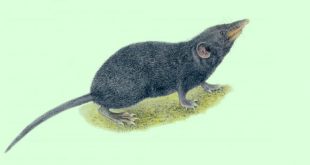
An international team of biologists from the United States and Germany has discovered a new species of shrew living in a forested area on Mt. Mantalingahan, a mountain on Palawan Island in the Philippines. An illustration of the Palawan moss shrew (Palawanosorex muscorum). Image credit: Velizar Simeonovski, Field Museum of …
Read More »Could We Be the Last Generation to Know What the Flu Feels Like?
Humans and viruses have had a long and turbulent history together. Like a married couple that can’t stop feuding, we’ve exchanged barbs with these old foes on down the ages. In our present epoch, it’s estimated that as much as 8 percent of human DNA is a relic of ancient …
Read More »Compound Derived from Immune Cells Treats Psoriasis in Mice
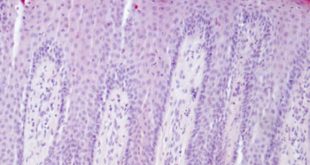
A modified form of a compound called itaconate suppresses an inflammatory pathway that is overactive in many autoimmune diseases, suggesting that it may be effective against psoriasis as well as multiple sclerosis, rheumatoid arthritis, and lupus, according to a study published in the journal Nature. Lesional psoriatic skin. Image credit: …
Read More »Gravity of Venus and Jupiter Elongates Earth’s Orbit Every 405,000 Years
A research team led by Rutgers University’s Professor Dennis Kent has documented a gradual shift in Earth’s orbit that repeats regularly every 405,000 years, playing a role in natural climate swings. Astrophysicists have long hypothesized that the cycle exists, but Professor Kent and co-authors have found the first verifiable physical …
Read More »The Moon May Have Once Had a Magma Ocean Beneath the Surface
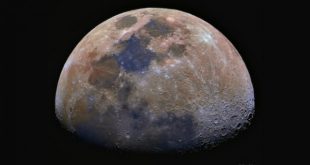
The moon as it exists today is as desolate as planetoids come. It’s airless, geologically inert, and there’s no magnetic field. However, we know from the study of moon rocks brought back by the Apollo missions that the moon did once have a magnetic field. Scientists haven’t known why before, …
Read More »Archaic Hominins Arrived in Philippines as Early as 700,000 Years Ago
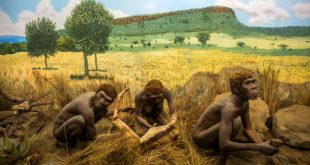
An international team of scientists has unearthed 57 stone tools and butchered animal bones at Kalinga in the Cagayan Valley of northern Luzon, the largest and most northerly island in the Philippines. Archaic hominins. Image credit: Ninara / CC BY 2.0. Along with an almost complete skeleton of extinct Rhinoceros …
Read More »