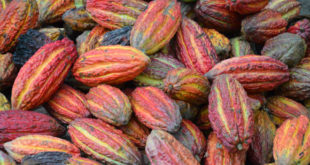
An international team of scientists has found that the upper Amazon region gave birth to the domesticated Theobroma cacao, the plant from which chocolate is made. Zarrillo et al report the earliest evidence of cacao use in the Americas and the first archaeological example of its pre-Columbian use in South …
Read More »Stomach-Turning Medieval Delicacy: Archaeologists Unearth Teeth of Lamprey Fish in London
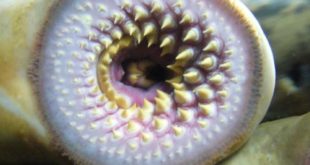
A team of archaeologists from the Museum of London Archaeology (MOLA) has uncovered keratin ‘teeth’ of lamprey at a site near Mansion House station in London, the United Kingdom. Lamprey in Sala Maremagnum of Aquarium Finisterrae in Corunna, Galicia, Spain. Image credit: Drow Male / CC BY-SA 3.0. Lampreys are …
Read More »WWF Study Shows 60% Decrease in Vertebrate Population Counts
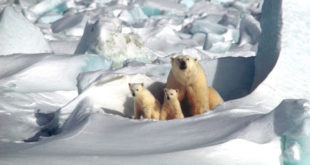
It is no secret that climate change and environmental negligence have been worsened by human activity and accelerated industrialization over the past century, and that wildlife greatly suffers as a result. A recent study published by the World Wildlife Foundation (WWF) analyzes the most recent data of animal populations worldwide, …
Read More »Scientists Crack Mystery of World’s Smallest Flightless Bird: Inaccessible Island Rail
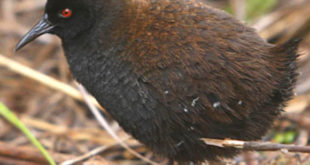
Inaccessible Island, the westernmost of three islands in the Tristan Archipelago, is located about 2,250 miles (3,600 km) east of Porto Alegre, Brazil, and about 1,750 miles (2,800 km) west of Cape Town, South Africa. Formed by a now-extinct volcano 3 to 6 million years ago, the island is the …
Read More »Mediterranean Diet Enriched with Fatty Fish Could Reduce Asthma Symptoms in Children
A Mediterranean diet supplemented with two fatty fish meals per week might be a potential strategy for reducing airway inflammation in childhood asthma. Eating fish such as salmon, trout and sardines as part of a healthy diet can reduce asthma symptoms in children. Image credit: Dana Tentis. Childhood asthma is …
Read More »Novel Compound Strongly Inhibits Botulinum Neurotoxin
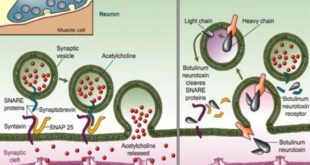
A newly-identified natural compound called nitrophenyl psoralen could be used as a treatment to reduce paralysis induced by botulism, a rare illness caused by toxins that attack the nervous system. Mechanism of action of botulinum toxin: the light chain of (BT-A) cleaves SNAP-25 (synaptosome-associated protein of 25 KDa) and consequently …
Read More »Juno Spots ‘Waves Trains’ in Jovian Atmosphere
NASA’s Juno orbiter has detected ‘wave trains’ — massive structures of moving air that appear like waves — in the atmosphere of Jupiter. Three waves can be seen in this image, which is an excerpt of a JunoCam image taken on February 2, 2017, during Juno’s fourth flyby of Jupiter. …
Read More »Dawn Fades to Black as Ceres Probe Goes Silent
It’s been a rough week for NASA missions. Earlier this week we covered news that Kepler, the planet-hunting telescope that revolutionized our understanding of extrasolar planets, has finally run out of fuel. Now it’s time to say goodbye to Dawn, our first probe to examine the mysteries of Ceres and …
Read More »NASA Will Use ISS Supercomputer for Science Experiments
While the International Space Station (ISS) is a technological marvel, it has not traditionally had a lot of onboard processing capacity. That changed last year when NASA delivered a supercomputer to the station. It was only there for a test run, but now the agency plans to use it for …
Read More »Modern Birds Inherited Colored Eggs from Their Dinosaur Ancestors, Study Says
Modern birds inherited their egg color from non-avian dinosaur ancestors that laid eggs in fully or partially open nests, according to new research led by Yale University researcher Jasmina Wiemann. The colors found in modern birds’ eggs did not evolve independently, as previously thought, but evolved instead from dinosaurs. This …
Read More »