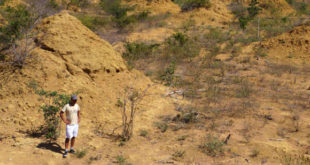
An international team of entomologists has found that numerous termite mounds in Brazil are between 690 to 3,820 years old. The termite mounds are found in dense, low, dry forest and can be seen when the land is cleared for pasture. Image credit: Roy Funch. The vast array of termite …
Read More »SpaceX Renames In-Development ‘BFR’ to ‘Starship’
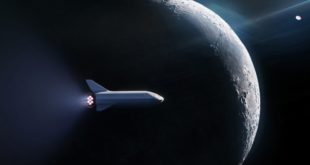
SpaceX’s next giant rocket, the Big Falcon Rocket (BFR) doesn’t even exist in any capacity beyond design renders and some parts in manufacturing facilities, but it’s already getting a new name. CEO Elon Musk casually announced the change on Twitter, as he is wont to do. The BFR is now …
Read More »NASA Explains How It Will Track InSight’s Mars Landing Next Week
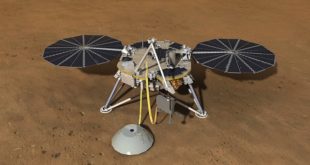
The InSight Mars lander might not be as flashy as a rover that gets to drive all around the planet, but it’s an important instrument in our quest to understand the red planet. After launching earlier this year, InSight is nearing its destination. It should touch down on Mars within …
Read More »NASA May Sell Tickets to Space Tourists
There’s nothing novel about the idea of charging someone big bucks for a trip into space. Russia started charging a string of ultra-wealthy people $20 million or more for a trip to the International Space Station (ISS). That was just practice for charging NASA per seat on its Soyuz rockets, …
Read More »New Species of Long-Necked Dinosaur Discovered
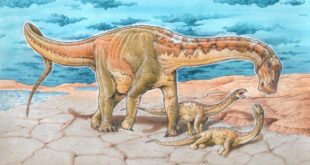
A new species of sauropod dinosaur that stretched 39 feet (12 m) from head to tail has been unearthed in Patagonia, Argentina. Lavocatisaurus agrioensis. Image credit: Canudo et al, doi: 10.4202/app.00524.2018. Dubbed Lavocatisaurus agrioensis, the new dinosaur is thought to have lived approximately 110 million years ago (Cretaceous period). The …
Read More »Elephantnose Fish Use Electric Colors to Reliably Identify Prey, Study Says
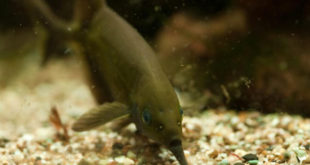
An African freshwater fish species called the Peters’ elephantnose fish (Gnathonemus petersii) generates weak electrical pulses to safely navigate its environment. Animals, plants, or the fish’s favorite food — mosquito larvae — provide specific electric colors during this electrolocation, according to a new study published in the journal Current Biology. …
Read More »NASA Selects Ancient Crater Lake as Landing Site for Future Mars Rover
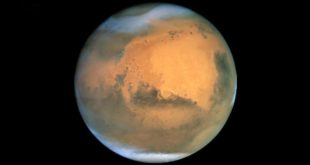
One of the most significant benefits of Curiosity’s work on Mars won’t actually help Curiosity at all. After years of probing the Red Planet with probes like Curiosity, Spirit, and Opportunity, we’ve gathered a great deal of information about how water once flowed across Mars. Features that once looked as …
Read More »Newly-Discovered Protists Add New Branch to Tree of Eukaryotic Life
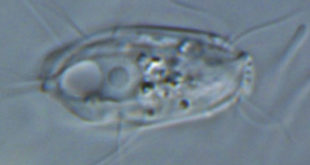
A team of researchers from Dalhousie University, Canada, has identified two previously undescribed species of hemimastigotes — members of the extremely rare protist group Hemimastigophora. Through phylogenetic analysis, they found that hemimastigotes represent a previously unrecognized supergroup of eukaryotes. The findings are published in the journal Nature. Hemimastix kukwesjijk. Image …
Read More »Study: Siberian Willow Warblers Migrate Incredible 8,000 Miles One Way
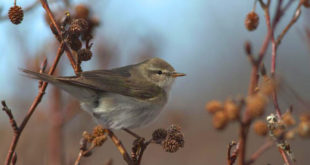
A small songbird called the Siberian willow warbler (Phylloscopus trochilus yakutensis) holds a long-distance migration record in the 10-gram weight category — with the tiny birds flying around 8,000 miles (13,000 km) or longer to reach their destination. The Siberian willow warbler (Phylloscopus trochilus yakutensis). Image credit: Kristaps Sokolovskis. The …
Read More »Scientists Redefine Four Basic Metric Units: Kilogram, Ampere, Kelvin and Mole
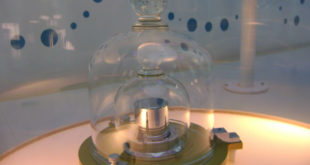
After decades of groundbreaking laboratory work, the world’s scientific and technical community came together on November 16, 2018, to redefine kilogram (kg), ampere (A), kelvin (K) and mole (mol) — four of the seven base units for the International System of Units (SI), informally known as the metric system. The …
Read More »