Science

99-Million-Year-Old Ammonite Found in Burmese Amber
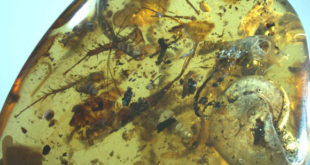
An international team of paleontologists has found a piece of amber containing the beautifully preserved ammonite, several marine and land organisms that lived 99 million years ago (Cretaceous period). The 99-million-year-old piece of amber from northern Myanmar. Image credit: Nanjing Institute of Geology and Palaeontology. The ammonite-bearing piece of amber …

Read More »

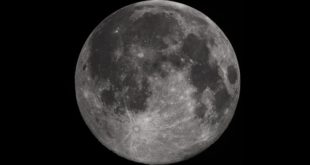
The Moon May Not Be Geologically Dead After All

  Geologic processes, like your mother, are both fundamentally responsible for life as we know it and probably something you don’t think about very much. (You did call your mother on Sunday, right?) Geologists are interested in the geological activity going on across the solar system because we know these …

Read More »

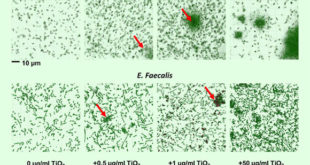
Food Additive E171 May Impact Human Health

E171, a mixture of micro- and nano-sized particles of titanium dioxide (TiO2), is commonly used in high quantities in foods and some medicines as a whitening agent. Found in more than 900 food products such as chewing gum and mayonnaise, E171 is consumed in high proportion everyday by the general …

Read More »

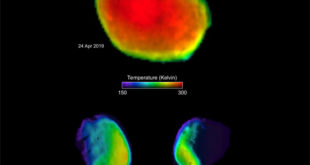
Mars Odyssey Examines Phobos in Infrared Light

On April 24, 2019, NASA’s Mars Odyssey orbiter captured a new thermal image of Phobos, the larger of Mars’ two moons. Each color in the full-moon image represents a temperature range detected by Odyssey’s Thermal Emission Imaging System (THEMIS) camera. These three views of the Martian moon Phobos were taken …

Read More »

Deep-Sea Fishes Catch Color with Rods

Some deep-sea fishes have developed highly sensitive color vision that could help them determine predator from prey in the dimly-lit depths. The lanternfish has bioluminescent organs and an increased number of rod opsin genes. Image credit: Zuzana Musilová, Charles University. Color vision in vertebrates is usually achieved through the interaction …

Read More »

Researchers Find ‘World’s Oldest Wetland Tree’

Bald cypress trees (Taxodium distichum) over 2,000 years old grow in the forested wetlands along Black River south of Raleigh, North Carolina. One of the trees is at least 2,624-years old, making the bald cypress the oldest-known wetland tree species, the oldest living trees in eastern North America, and the …

Read More »

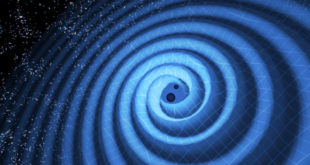
Gravitational Waves Leave Observable Aftereffects in Universe

Gravitational waves are ‘ripples’ in space-time caused by some of the most violent and energetic processes in the Universe. Albert Einstein predicted the existence of gravitational waves in 1916 in his general theory of relativity. New research shows those waves leave behind plenty of ‘memories’ that could help detect them …

Read More »
Bizwhiznetwork Consultation