An international team of researchers from the United States and Italy has identified new genetic variants associated with extreme survival and reduced risks for cardiovascular and Alzheimer’s diseases. Schematic of the analyses conducted to discover longevity associated variants (LAV), LAV with significant joint effect on extreme longevity (jLAV), and LAV …
Read More »DNA Study Sheds Light on Evolution of Dog Breeds
Genetic material from 161 modern breeds helped a team of researchers at the National Human Genome Research Institute (NHGRI) of the National Institutes of Health assemble the most comprehensive evolutionary tree of dogs. The results are published in the journal Cell Reports. Representatives from each of the 23 clades of …
Read More »Denisovan and Neanderthal DNA Uncovered in Caves without Skeletal Remains
New research led by the Max Planck Institute for Evolutionary Anthropology (MPI-EVA) shows that Pleistocene cave sediments represent a rich source of ancient DNA that often includes traces of hominin DNA, even at sites where no hominin remains have been discovered. Denisova Cave in the Altai Mountains of southern Siberia. …
Read More »Despite What You May Have Heard, Licking Frogs Does Not Cure the Flu
Amphibian skin is an interesting thing, between the chemicals secreted by the animals themselves and the microbes that thrive on their skin. Poison dart frogs, those neon cuties of the rainforest, are thusly named because their skins secrete a chemical so poisonous that the indigenous people of the Amazon hunt …
Read More »Researchers Sequence Barley Genome
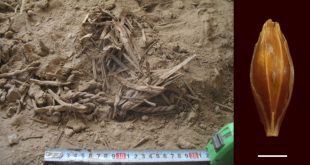
The International Barley Genome Sequencing Consortium, which is led by Dr. Nils Stein of the Leibniz Institute of Plant Genetics and Crop Plant Research, Germany, has mapped the entire genome of barley (Hordeum vulgare), the world’s fourth most important cereal crop after wheat, rice and maize. The research appears in …
Read More »Scientists Find Link between Immune System, Memory and Structure of Brain
In two separate studies, researchers have demonstrated that both the structure of the brain and several memory functions are linked to immune-related genes. The thickness of the cerebral cortex is correlated with the epigenetic profile of immune-related genes. Image credit: University of Basel. The body’s immune system has a number …
Read More »Scientists Use CRISPR-Cas9 to Create Red-Eyed Mutant Wasps
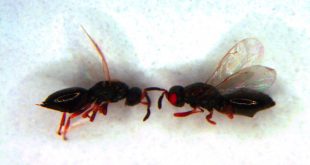
Genetic scientists from the University of California, Riverside, and the W.M. Keck Science Department of Claremont McKenna, Pitzer and Scripps Colleges, have managed to create a strain of red-eyed mutant wasps. Red-eyed Nasonia vitripennis. Image credit: Li et al, doi: 10.1038/s41598-017-00990-3. The red-eyed wasps were created to prove that CRISPR …
Read More »Researchers Identify ‘Night Owl’ Gene Variant
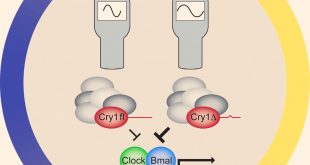
An international team of scientists led by the Rockefeller University has discovered that a variant of the human gene CRY1 (cryptochrome circadian clock 1) slows the internal biological clock, which dictates rhythmic behavior such as sleep/wake cycles. The study was published in the April 6 issue of the journal Cell. …
Read More »‘Sleep Gene’ Identified: FABP7
An international team of scientists from the United States and Japan has seen how a particular gene, called the fatty acid binding protein 7 (FABP7), is involved in the quality of sleep experienced by three different animals, including humans. The study was published in the April 5, 2017 issue of …
Read More »Ancient DNA Reveals Genetic Continuity between Early Holocene, Modern Populations in Northwest North America
According to a new analysis of nuclear DNA from ancient individuals, many of today’s indigenous peoples living in southern Alaska and coastal British Columbia are descendants of the first humans to make their home in northwest North America more than 10,000 years ago (early Holocene epoch). A study by John …
Read More »