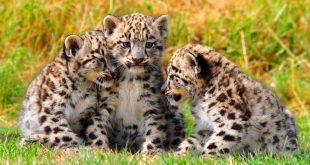
There are three different subspecies of the snow leopard (Panthera uncia), the world’s most elusive large big cat, according to a new study published in the Journal of Heredity. According to Janecka et al, the snow leopard (Panthera uncia) is actually three different subspecies. Image credit: Dingopup / The Cat …
Read More »Study: Male Great Tits Choose Their Neighbors Based on Personality
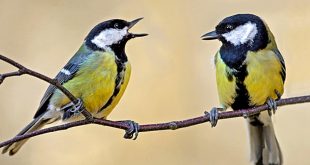
Male great tits (Parus major) choose neighbors with similar personalities to their own, according to new research from the University of Oxford, UK. Johnson et al assessed whether a great tit breeding population is structured by personality. Image credit: Shirley Clarke / Fordingbridge Camera Club / CC BY-SA 3.0. Lead …
Read More »Two New Species of Tarsiers Discovered in Indonesia
Two new tarsier species have been discovered in the forests of the northern peninsula of Sulawesi, Indonesia. The Gursky’s spectral tarsier (Tarsius spectrumgurskyae) from Tangkoko Nature Reserve, Sulawesi, Indonesia. Image credit: Alfrets Masala / Shekelle et al / Primate Conservation. Tarsiers are small, nocturnal, predaceous primates of the 45-million-year-old family …
Read More »Varanus douarrha: Researchers Rediscover Long-Lost Species of Monitor Lizard
An international team of researchers has found and re-described a species of monitor lizard, Varanus douarrha, from the island of New Ireland in the Bismarck Archipelago, northeast of Papua New Guinea. Varanus douarrha. Image credit: Valter Weijola. Varanus douarrha was described from a single specimen obtained by French naturalist René …
Read More »Gut Bacteria ‘Speak’ to Brain to Control Food Choices in Animals
In a study published recently in the journal PLOS Biology, neuroscientists identified three gut bacteria species — Acetobacter pomorum, Lactobacillus plantarum and L. brevis — that have an impact on animal dietary decisions. According to Leitao-Goncalves et al, gut bacteria control food choice and egg laying in Drosophila melanogaster. Image …
Read More »Two New Species of African Mole-Rats Discovered in Tanzania
Scientists working in Tanzania have discovered and named two new species of the mole-rat genus Fukomys. The research was published in the journal PeerJ. The Hanang mole-rat (Fukomys hanangensis). Image credit: Chris Faulkes. African mole-rats of the family Bathyergidae are burrowing rodents that occur throughout sub-Saharan Africa, with much of …
Read More »Three New Species of Fungus-Farming Ants Discovered in South America
Three new species of the ant genus Sericomyrmex have been discovered in Brazil, Venezuela, Colombia, Ecuador and Peru. Sericomyrmex radioheadi, worker. Image credit: A. Ješovnik T.R. Schultz, doi: 10.3897/zookeys.670.11839. The genus Sericomyrmex belongs to the fungus-farming ants (tribe Attini), a New World group of over 250 species, all of which …
Read More »Wax Moth Caterpillars Found to Eat Polyethylene
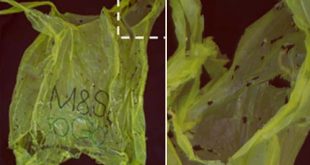
An international team of researchers from Spain and the United Kingdom has found that a caterpillar of the greater wax moth (Galleria mellonella) — commonly known as a wax worm — has the ability to biodegrade polyethylene. Polyethylene degradation by wax worms. Left: plastic bag after exposure to about 100 …
Read More »Study: Oxygen-Deprived Naked Mole-Rats Turn into ‘Plants’
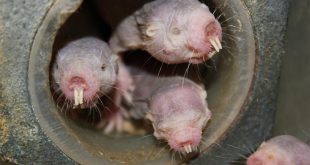
Deprived of oxygen, African naked mole-rats (Heterocephalus glaber) can survive by metabolizing a type of sugar called fructose just as plants do, a new study says. Prof. Gary Lewin holding a naked mole-rat (Heterocephalus glaber). Image credit: Roland Gockel, MDC. The naked mole-rat is a nearly hairless and nearly sightless …
Read More »Pigeons May Share Human Ability to Build on Work of Others
A team of researchers at the University of Oxford’s Department of Zoology has shown that the elements of the capacity of humans to build on the work of others may also be present in homing pigeons (Columba livia). Single flying pigeon. Image credit: Takao Sasaki. The ability to gather, pass …
Read More »