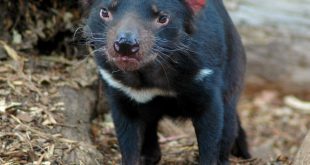
The overall population numbers of wild Tasmanian devils (Sarcophilus harrisii) are continuing to decline, due to the presence of a transmissible cancer, according to a study published in the Journal of Applied Ecology. A young Tasmanian devil (Sarcophilus harrisii). Image credit: Keres H. / CC BY-SA 4.0. Tasmanian devils face …
Read More »Giant Viruses May Have Played Important Role in Evolution of Life
Dr. Albert Erives, a biologist at the University of Iowa, has identified a virus family whose set of genes is similar to that of eukaryotes, an organism classification that includes all plants and animals. The finding is important because it helps clarify how eukaryotes evolved after branching from prokaryotes (single-celled …
Read More »Chimps’ Self-Control is Related to General Intelligence: Study
Chimpanzees’ overall intelligence is correlated to their ability to exert self-control and delay gratification, according to a study published in the journal Current Biology. This is the first study to examine the relation between general intelligence scores and delayed gratification abilities in common chimpanzees (Pan troglodytes). Image credit: Bernd Hildebrandt. …
Read More »Flowering Plants Originated Between 149 and 256 Million Years Ago, Researchers Say
Angiosperms (flowering plants) are neither as old as suggested by previous molecular studies, nor as young as a literal interpretation of their fossil record, according to new research. Flowering plants likely originated between 149 million years ago (Jurassic period) and 256 million years ago (Permian period). Image credit: Ilona Ilyés. …
Read More »Study: Viruses are Circulating in Earth’s Atmosphere — and Falling from It
Viruses fall back to Earth via dust storms and precipitation, according to new research published in the International Society for Microbial Ecology Journal. Viruses are circulating in the atmosphere of our planet. Image credit: Arek Socha. “Every day, more than 800 million viruses are deposited per m2 above the planetary …
Read More »Venus Flytraps Don’t Trap Their Pollinators
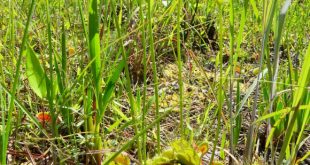
Scientists have for the first time discovered which insects pollinate a rare carnivorous plant called the Venus flytrap (Dionaea muscipula) — and found that the flytrap doesn’t dine on its pollinator species. Venus flytrap in its native habitat. Image credit: Clyde Sorenson. “Everybody’s heard of Venus flytraps, but nobody knew …
Read More »Woodpeckers Show Signs of What Looks Like Brain Damage in Humans
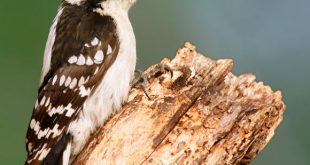
Woodpeckers experience forces up to 1,200-1,400 g while pecking. It is assumed due to evolutionary adaptations, the woodpecker is immune to brain injury. This assumption has led to the use of the woodpecker as a model in the development of sports safety equipment such as football helmets. However, a new …
Read More »Scientists Find Botulinum-Like Toxin in Strain of Animal Gut Bacteria
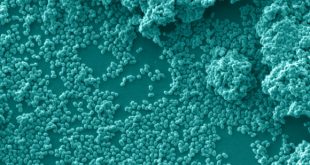
Enterococci are hardy microbes that thrive in the gastrointestinal tracts of nearly all land animals, including our own, and generally cause no harm. So the discovery of a botulinum neurotoxin-like toxin in a strain of Enterococcus called E. faecium is raising scientific eyebrows. Enterococci. Image credit: Francois Lebreton, MEEI. Dubbed …
Read More »Larger Colonies of Honeybees Have Quieter Combs, Scientists Find
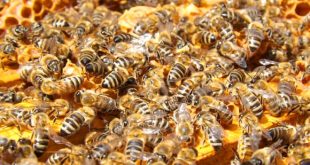
Bigger honeybee colonies actually have quieter combs than smaller ones, according to a team of researchers at Cornell University, Ithaca. Larger honeybee colonies have quieter combs. Image credit: Seagul. “The surprising result was that — and at first I thought something must be wrong — when there are more bees …
Read More »Scientists Find New Type of Virus in World’s Oceans: Autolykiviridae
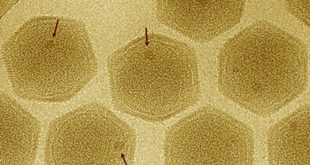
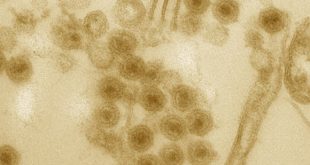
Non-tailed double-stranded DNA (dsDNA) viruses infect bacteria and dominate water samples from the world’s oceans. They have long escaped analysis because they have characteristics that standard tests can’t detect. However, scientists from MIT and elsewhere have now managed to isolate and study representatives of these elusive viruses. Thin-section electron microscopy …
Read More »