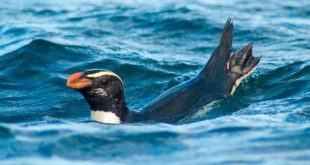
The Fiordland penguin (Eudyptes pachyrhynchus), the only crested penguin species breeding on the New Zealand mainland, is currently one of the least studied and rarest penguin species in the world. In a new study of this elusive species, an international research team led by the University of Otago tracked several …
Read More »Snakebites Decrease after Drought, Increase after Periods of High Rainfall, Shows New Study
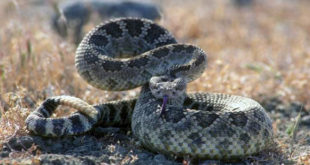
Snakebites, contrary to public opinion, increase after rainy years, not drought, according to a new study that examined two decades of rattlesnake bite history in California. The study was published online this week in the journal Clinical Toxicology. The western rattlesnake (Crotalus oreganus). Image credit: California Department of Fish and …
Read More »Researchers Discover Two New Species of Edible Truffles
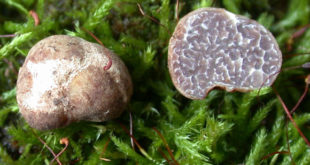
A research team led by University of Florida scientists has discovered two new species of ‘true’ truffles growing in the roots of pecan trees in the United States. Tuber brennemanii from an oak forest in the Midwest. The specimen on the left shows the rough, knobby exterior of the mushroom …
Read More »New Bird Species Discovered in Africa: Western Square-Tailed Drongo
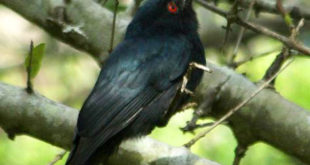
An international team of ornithologists has discovered a new species of drongo living in the forests of western Africa. A square-tailed drongo in Mkhuze Game Reserve, South Africa. Image credit: Alan Manson / CC BY-SA 2.0. Drongos are a family (Dicruridae) of Old World perching birds. All species in this …
Read More »Study: Infants Use Same Gestures as Chimpanzees
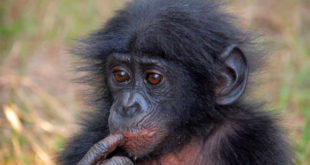
Great apes of all species — human and non-human — communicate using a combination of different types of signals: vocalizations, gestures, facial expressions and body postures. According to a new study, published in the journal Animal Cognition, one- to two-year-old human children use many of the gestures observed in great …
Read More »Common Herbicide Glyphosate Alters Bee Gut Microbiota, Increases Susceptibility to Infections
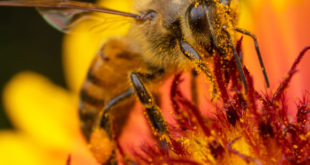
A new study published in the Proceedings of the National Academy of Sciences shows that honeybees exposed to glyphosate — the primary herbicide used globally for weed control — lose some of the beneficial gut bacteria and are more susceptible to infection by opportunistic pathogens. A honeybee. Image credit: Alex …
Read More »Praying Mantis Spotted Hunting and Eating Fish for the First Time
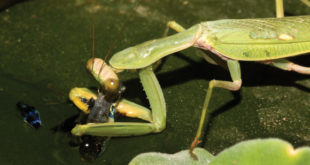
Praying mantises are carnivorous insects with powerful raptorial front legs. Their diet includes insects, lizards, frogs, newts, mice, small birds, snakes and turtles. A new study, published in the Journal of Orthoptera Research, adds fish to their menu. Hierodula tenuidentata eating Poecilia reticulata from the tail. Image credit: Rajesh Puttaswamaiah. …
Read More »Intestinal Bacteria Can Generate Electric Current, Study Shows
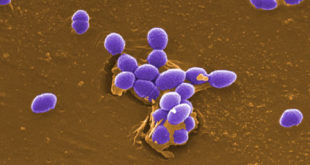
Scientists already know that bacteria can create an electric current outside their own cell, known as extracellular electron transport. This has been demonstrated and analyzed in detail in some bacteria that specialize in the metabolism of metal salts. A team of researchers from Lund University and the National University of …
Read More »New Hummingbird Species Discovered in Ecuador
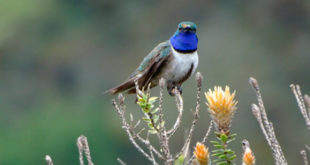
A new species of hummingbird, called the blue-throated hillstar (Oreotrochilus cyanolaemus), has been discovered in the southwestern Andes of Ecuador by an international team of ornithologists. The blue-throated hillstar (Oreotrochilus cyanolaemus), male. Image credit: Sornoza-Molina et al, doi: 10.1642/AUK-18-58.1. Hillstars are hummingbirds of the genus Oreotrochilus. These birds are approximately …
Read More »Scientists Discover New Species of Reef Fish: Tosanoides aphrodite
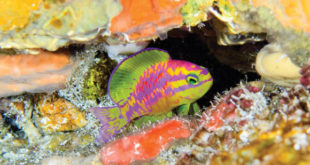
Marine biologists from the California Academy of Sciences have discovered a new species of coral reef fish living in the waters off Saint Paul’s Rocks, an archipelago of small islets located around 580 miles (940 km) from northeastern Brazil. Tosanoides aphrodite in its natural environment, photographed at a depth of …
Read More »