Skype

Brazilian Capuchin Monkeys Unintentionally Make Sharp-Edged Stone Flakes

A University of Oxford-led team of scientists has observed bearded capuchins (Sapajus libidinosus) in Brazil deliberately break stones, unintentionally producing sharp-edged flakes that have the characteristics and morphology of intentionally produced hominin tools. Examples of flaked stones produced by bearded capuchins (Sapajus libidinosus). Scale bars – 5?cm. Image credit: Tomos …

Read More »

New Species of Drywood Termite Discovered in Colombia

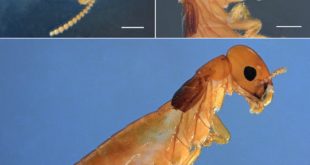
A new species of drywood termite has been described from tropical dry forests of Colombia’s Caribbean coast. Proneotermes macondianus. Scale bars – 0.5 mm. Image credit: Casalla R. et al. Discovered by termitologists from Germany, the United States and Colombia, the new termite has been officially named Proneotermes macondianus. “The …

Read More »

Three New Species of Forest Robin Discovered in Africa

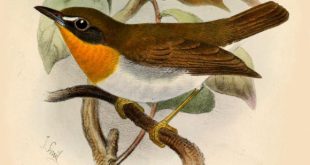
Researchers have described three new species in the previously monotypic bird genus Stiphrornis: two from West Africa and one from the Congo. Stiphrornis erythothorax, until now the only species in the genus Stiphrornis, by Joseph Smit, 1883, in the Catalogue of the birds in the British Museum, vol. 7. The …

Read More »

Plant-Eating Mammals Have Bigger Bellies, Claims New Study

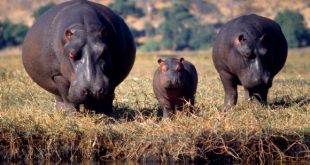
Herbivorous, or plant-eating, mammals have bigger bellies than their usually slim carnivorous counterparts, according to a study led by University of Zurich researcher Marcus Clauss. Hippo family in Botswana. Image credit: Hans Stieglitz / CC BY-SA 3.0. Prof. Clauss and his colleagues from Germany and the UK studied the shape …

Read More »

Chimps Discovered Using Tools to Fish for Algae

Chimpanzees in Guinea are regularly using long and robust tools to fish for algae, reveals new research published this month in the American Journal of Primatology. Chimpanzee fishing algae. Image credit: PanAf Project / Max Planck Institute for Evolutionary Anthropology. Chimpanzees (Pan troglodytes) often use tools to extract or consume …

Read More »

Brazilian Free-Tailed Bat is Fastest Flying Animal, New Study Says

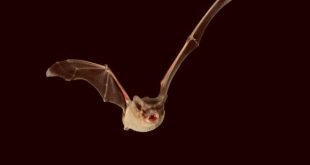
A study published in the journal Royal Society Open Science shows that the Brazilian free-tailed bat can achieve flight speeds of 100 mph (160 km per hour) — faster than those previously documented for any bat or bird. The Brazilian free-tailed bat (Tadarida brasiliensis) can reach record-breaking speeds, according to …

Read More »

Researchers Discover How Piezo Protein Senses Touch

A new study published in the journal Cell Reports reveals that a protein called Piezo 1 is directly responsible for sensing touch. Knowledge about Piezo 1 could be relevant for designing better pain medications and exploring future therapies for blood disorders, hypertension and more. Piezo proteins transduce physical forces and …

Read More »
Bizwhiznetwork Consultation